Cellphones

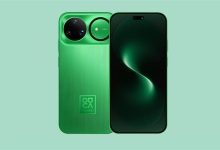
Huawei officially announced that the Huawei nova 15 series and all-scenario new product launch event is scheduled for December 22 at 14:30. The teaser poster shows that the Huawei nova 15 series has undergone a complete design refresh, with the rear camera adopting a striking horizontal dual-ring design. The lineup includes three models: nova 15, nova 15 Pro, and nova 15 Ultra, endorsed by Yi Yangqianxi. In addition to the new exterior design, the nova 15 series also delivers significant performance improvements. According to news,” the standard nova 15 will be equipped with a Kirin 8-series chipset, while the nova 15 Pro and nova 15 Ultra will feature Kirin 9-series chipsets. It is reported that the previous nova 14 series...
Data shows that after its launch in Spain, OPPO Find X9 sales in just two weeks reached nearly five times that of its predecessor, while the overall overseas sales of the Find X9 series have already doubled compared to the previous generation. OPPO Find series product manager Zhou Yibao also revealed that the Find X9 series is not only popular in Europe but has achieved success globally. In addition, the high‑end Find X9 Pro version has recorded overseas sales almost three times higher than its predecessor. The Find X9 series consists of two models: Find X9 and Find X9 Pro. The Find X9 features a 6.59‑inch 1.5K flat display, powered by the MediaTek Dimensity 9500 platform. It houses a 7025mAh...
OPPO A6l officially went on sale, offered in a single 12GB+256GB version. The OPPO A6l is powered by the Snapdragon 7 Gen 3 chipset built on a 4nm process, achieving an AnTuTu benchmark score of over 890,000. It supports up to 12GB memory expansion, combined with Aurora Engine + Tide Engine, promising smooth performance for up to six years. The device also features OPPO’s self‑developed “Shanhai” communication enhancement chip, with a full‑surround antenna layout in the middle frame. Signal strength in weak networks is boosted by 200%, and it supports communication without a network. It comes with dual‑band GPS and tri‑band BeiDou positioning. Inside is a 7,000mAh long‑life battery designed to last six years. On a full charge, it supports...
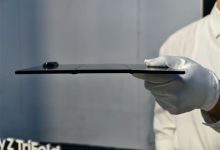
The Samsung Galaxy Z TriFold and Huawei Mate XT series take completely different approaches. Samsung adopts a dual‑screen “G‑shaped” folding design, where the flexible large display is protected inside when folded, naturally offering more protection than Huawei’s solution and giving it a significant advantage in drop resistance. Of course, this design has pros and cons—the biggest drawback is the higher weight and thickness. You immediately feel the heft when holding it, since it uses dual hinges and dual screens. The device weighs 309g, close to a can of soda, and measures 12mm thick when fully folded. At the same time, you can sense Samsung’s consistent premium feel in foldables: the craftsmanship is meticulous, the edges don’t feel sharp in the...
A blogger has created a rendering of the Xiaomi 17 Ultra’s appearance, and the device will be officially released this month. Compared with the Xiaomi 17 Pro Max, the biggest change in the Xiaomi 17 Ultra is the adoption of a circular camera module without a rear display, while the overall design remains consistent with the previous generation. In detail, the Xiaomi 17 Ultra features a Leica triple-camera setup on the back: a 200‑megapixel periscope telephoto lens at the top, with a 1‑inch main camera and an ultra‑wide‑angle lens below. On the front, it has a flat display, expected to use the same “Super Pixel New National Screen” as the Xiaomi 17 Pro Max. Each pixel contains independent red, green,...
Open-Source Core with Google Ecosystem Android is a mobile operating system developed by Google and the Open Handset Alliance. It is based on the Linux kernel and designed primarily for smartphones and tablets, but also powers smart TVs, cars, and wearables. Android combines an open-source foundation with optional proprietary services from Google. Historical Background Open-Source Nature Relationship with Google Mobile Services (GMS) Architecture and Features Summary 7.Comparison with Other Mobile OS Feature Android iOS (Apple) HarmonyOS (Huawei) Source Model Open-source (with proprietary parts) Closed-source Hybrid (open + proprietary) Customization Very high (skins, themes, OEM tweaks) Limited (Apple-controlled) Moderate App Store Google Play + third-party stores App Store only AppGallery + APKs Market Share Largest globally Strong in premium markets Regional...
Apple’s Unified Smartphone Experience iPhone is Apple’s flagship smartphone line, first introduced in 2007. It runs exclusively on iOS, Apple’s proprietary mobile operating system. Unlike Android devices, which share a common OS across many manufacturers, the iPhone and iOS are designed together, ensuring tight integration of hardware and software for performance, security, and user experience. Historical Background Architecture and Features iPhone (Hardware) iOS (Software) Types of iPhones Model Description Standard iPhone Mainstream models (e.g., iPhone 15, 16, 17). iPhone Pro Premium models with advanced cameras and displays. iPhone Air (2025) Lightweight model focusing on portability. iPhone SE Budget-friendly model with classic design and modern internals. Real-World Example: iPhone 15 Pro (2023) Comparison with Other Smartphones Feature iPhone + iOS Android...
Microsoft’s Bold but Short-Lived Mobile OS Windows Phone was a proprietary mobile operating system developed by Microsoft, designed to compete with iOS and Android. It introduced a distinctive “Live Tiles” interface, tight integration with Office and Xbox services, and aimed to unify the mobile experience with the broader Windows ecosystem. Historical Background Architecture and Features Comparison with Other Mobile OS Feature Windows Phone iOS (Apple) Android (Google) Source Model Closed-source Closed-source Open-source (AOSP) Interface Live Tiles, Metro UI App grid, minimalist Highly customizable App Ecosystem Limited, fewer apps Large, curated App Store Largest, diverse Play Store Market Share Peaked ~3–4% globally ~20% globally ~70% globally Status Discontinued (2020) Active Active
The Mobile Giant of the 2000s Symbian OS was a proprietary mobile operating system originally derived from Psion’s EPOC32 in the late 1990s. It became the dominant smartphone platform of the 2000s, powering millions of devices across multiple brands, most notably Nokia. Symbian was known for its multitasking, adaptability, and early support for mobile internet and apps. Historical Background Architecture and Features Brands That Used Symbian Representative Models Comparison with Other Mobile OS Feature Symbian OS iOS (Apple) Android (Google) Source Model Proprietary (briefly open-source) Closed-source Open-source (AOSP) Interface S60, UIQ, MOAP variants App grid, minimalist Highly customizable App Ecosystem Fragmented, limited Curated App Store Largest, diverse Play Store Market Share Dominant in 2000s, declined after 2010 Growing since 2007...
Secure Communication for the Enterprise Era BlackBerry OS was a mobile operating system designed exclusively for BlackBerry smartphones. It emphasized secure communication, multitasking, and productivity, making it the preferred choice for businesses and governments in the 2000s. Historical Background Architecture and Features Representative Devices Comparison with Other Mobile OS Feature BlackBerry OS iOS (Apple) Android (Google) Source Model Closed-source Closed-source Open-source (AOSP) Strength Secure email, enterprise integration User-friendly, app-rich ecosystem Customizable, largest app library App Ecosystem Limited, enterprise-focused Large, curated App Store Largest, diverse Play Store Market Share Dominant in 2000s enterprise market Strong in consumer market Largest globally Status Discontinued (2013) Active Active
Huawei’s Distributed Operating System HarmonyOS is a multi-platform operating system developed by Huawei. Unlike traditional mobile OS platforms, HarmonyOS is built as a distributed OS, meaning it can seamlessly run across different device types — from phones and tablets to smart TVs, wearables, and IoT devices. It integrates tightly with Huawei Mobile Services (HMS) and AppGallery, Huawei’s alternative to Google’s ecosystem. Historical Background Architecture and Features Representative Devices Comparison with Other Mobile OS Feature HarmonyOS Android (Google) iOS (Apple) Source Model Hybrid (open + proprietary) Open-source (AOSP + proprietary GMS) Closed-source Design Distributed, cross-device Mobile-focused, customizable Mobile-focused, tightly controlled App Ecosystem Huawei AppGallery, Quick Apps Google Play Store Apple App Store Market Share Strong in China, growing globally Largest worldwide...
Samsung’s Open-Source Platform Tizen OS is a Linux-based, open-source operating system developed by Samsung and the Linux Foundation. It was originally designed for smartphones, smart TVs, wearables, and IoT devices. Today, Tizen is primarily used in Samsung Smart TVs, smartwatches, and connected appliances, while its smartphone branch has been discontinued. Historical Background Architecture and Features Representative Devices Comparison with Other Smart Device OS Feature Tizen OS Android TV / Wear OS WebOS (LG) Source Model Open-source + proprietary parts Open-source (AOSP + proprietary GMS) Proprietary (LG) Main Use Samsung TVs, wearables, IoT TVs, smartphones, wearables LG TVs App Ecosystem Samsung App Store, limited Google Play Store LG Content Store Market Share Strong in Samsung TVs Largest globally Niche, LG TVs...
 seseltan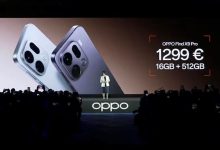
 Acer
Acer Apple
Apple ASUS
ASUS Dell
Dell HP
HP HUAWEI