





Westlake Robotics, incubated by Westlake University, has unveiled the humanoid robot Titan o1, powered by the world’s first motion generalization large model. Breakthrough Technology Demonstration Highlights Titan o1’s futuristic orange-black-silver design was paired with motion capture. When a staff member waved, turned, or kicked a ball, Titan o1 replicated every detail—arm angles, turning range, stride length, and rhythm—with millisecond precision. Ease of Use No programming skills required. With motion capture gear or simple computer input, users can make robots execute corresponding actions—“what you think is what they do.” Technical Edge Real-World Potential Beyond “cyber avatars,” Titan o1 could replace humans in high-risk environments such as firefighting, mining, or high-altitude maintenance, opening new horizons for practical deployment. This marks a milestone:...

This afternoon, Huawei officially launched the Enjoy 90 series, bringing Kirin chips and the latest HarmonyOS to the budget smartphone segment. Lineup Strategic Significance Statement from Yu Chengdong Although absent from the launch due to health reasons, Huawei’s Terminal BG Chairman Yu Chengdong posted: “Today, with the release of the Enjoy 90 series powered by Kirin chips and HarmonyOS, Huawei smartphones have truly achieved a full return!” This marks Huawei’s re-entry into the budget market, reinforcing its presence across the entire smartphone spectrum.

NVIDIA researchers have introduced a breakthrough compression technology called KVTC (KV Cache Transform Coding), designed to dramatically reduce the memory footprint of large language models (LLMs) during long conversations. Key Highlights Why It Matters Industry experts believe KVTC could become as standard as video compression, enabling AI systems to handle ever-longer conversations efficiently and at scale.

In recent years, the focus of AI has shifted from training to inference, and NVIDIA is aiming to reshape this space with its newly announced LPU (Language Processing Unit) chips at last week’s GTC conference. During the event, NVIDIA’s Chief Scientist Bill Dally sat down with Google’s Chief Scientist Jeff Dean for a deep technical discussion. Dally highlighted that the real bottleneck in AI inference today isn’t raw compute power—it’s communication overhead. This leap would represent a massive acceleration in AI responsiveness, making real-time, high-throughput inference practical for everyday use.
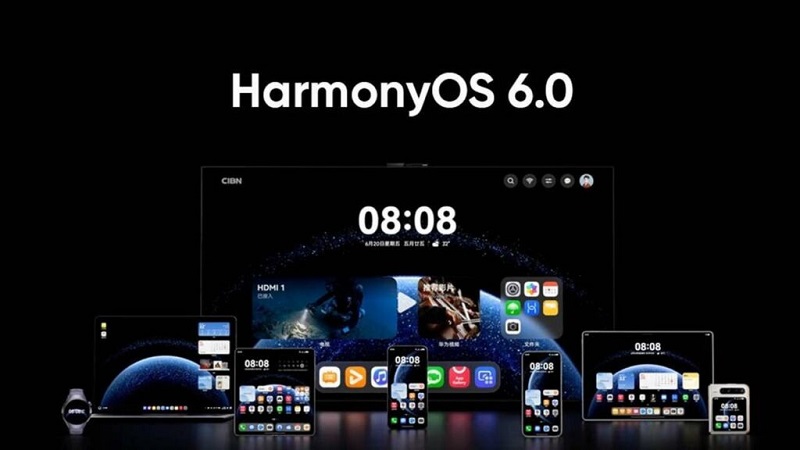
Huawei has officially scheduled the release of the Enjoy 90 series for March 23, featuring two core models: Enjoy 90 Plus and Enjoy 90 Pro Max. Design The Enjoy 90 Pro Max continues Huawei’s signature Star Ring symmetrical aesthetic, closely resembling the flagship Mate 80 series. It will be available in several refined colors: Feitian Green, Dawn Gold, Snow White, and Obsidian Black. Performance A major highlight is the inclusion of Kirin 8-series chips, previously reserved for higher-end nova models. This marks a significant leap in performance for the Enjoy lineup. Combined with the latest HarmonyOS 6, the series promises smoother and more stable system interactions compared to competitors in the same segment. Battery & Endurance Huawei emphasizes exceptional battery...

Latest data shows that by Week 11 of 2026, cumulative sales of the Huawei Mate 80 series have reached 4.5301 million units. Since its launch in November 2025, the Mate 80 series has remained in high demand, with the Pro models proving especially popular. Strong demand initially strained supply of the Kirin 9030 chips, but production capacity has since improved, stabilizing overall availability. Huawei’s official store indicates that most models and mainstream storage versions are now in stock, with only the Mate 80 Pro Max 16GB+1TB variant still sold out. Despite rising storage prices pushing Android flagship prices higher, Huawei has taken a contrarian pricing strategy: In terms of core specs, the Mate 80 Standard Edition uses the Kirin 9020,...

On March 22, Microsoft published an official blog promising comprehensive optimizations for Windows 11 within the year, aimed at improving performance, reliability, and the update experience. Key improvements include lower memory usage, reduced Copilot intrusiveness, and enhancements to File Explorer. In terms of update control—one of the most critical user concerns—Microsoft will introduce a faster, more predictable update process, ensuring devices need only restart once per month. Users will gain more direct control, with options to pause updates or restart/shut down without forced installations. Update progress will be displayed more clearly, with built-in recovery features to maintain system stability. Microsoft also aims to deliver a quieter, less disruptive system experience. This includes streamlining the new PC setup process, reducing restart...

Microsoft has announced a major update to Windows 11, delivering one of the most requested features: the ability to place the taskbar on any edge of the desktop—top, bottom, left, or right. This change removes the long-standing limitation of a bottom-only taskbar, a frequent complaint among users. The rollout will begin gradually for Windows Insider Preview members between March and April. Key improvements include: These enhancements mark a significant step in Microsoft’s effort to restore user trust by focusing on personalization, efficiency, and stability.
For years, DIY hardware enthusiasts have criticized Intel for frequently changing desktop processor sockets, forcing users to replace motherboards with each CPU upgrade. This situation may soon change. In a recent interview with Club386, Robert Hallock, Intel’s VP and GM of Enthusiast Channels, confirmed that Intel plans to introduce multi-generation compatible desktop sockets, a move that mirrors AMD’s long-term socket strategy. This means future Intel users may upgrade CPUs without needing a new motherboard. AMD has set the benchmark since 2017, with its AM4 and AM5 sockets supporting multiple CPU generations: By contrast, Intel has rolled out five sockets since 2017: LGA1151, LGA1200, LGA1700, LGA1851, and the upcoming LGA1954 for Nova Lake CPUs. LGA1851, supporting only Arrow Lake’s Core Ultra...
Reports indicate that the MiniMax M2.5 large model has held the crown as the world’s most-used AI model for five straight weeks. During a product demo, company researchers highlighted the striking price gap: overseas models offering similar capabilities can cost up to ten times more than MiniMax. This cost-performance advantage has become the core competitiveness of Chinese AI models in attracting global users. Two main factors drive this edge: In short, MiniMax’s dominance reflects not only technical efficiency but also structural cost advantages, positioning Chinese AI models as global leaders in the era of large-scale inference.

Huawei Cloud unveiled a breakthrough computing technology at its SME AI Solutions Conference: the FlexNPU Flexible Intelligent Computing Operating System, designed to rein in soaring token consumption and deliver optimal cost-performance for enterprise AI agents in the Agentic era. At the AI infrastructure layer, Huawei Cloud offers Ascend series products and its self-developed AI Infra OS. FlexNPU’s flexible computing technology meets small-model training needs for SMEs while boosting resource utilization through elastic scheduling. At the model service layer, Huawei Cloud supports mainstream open-source models, enabling businesses to select models tailored to their needs or fine-tune proprietary models at low cost. At the agent platform layer, Huawei Cloud provides efficient development environments to help SMEs build enterprise-grade AI agents. At the...

According to media reports, the latest data released by OpenRouter, the world’s largest AI model API aggregation platform, shows that as of March 15, China’s AI large models reached 4.69 trillion tokens in weekly calls, surpassing the United States for the second consecutive week. China’s models currently occupy the top three positions globally in token usage. JPMorgan forecasts that China’s AI inference token consumption will grow from about 10 quadrillion in 2025 to 3,900 quadrillion in 2030, representing a nearly 370-fold increase over five years. In the AI ecosystem, a token is the smallest unit of information processed by a model—whether it’s a user query or a piece of generated code, everything must be broken down into tokens for computation....
Latest Comments
666