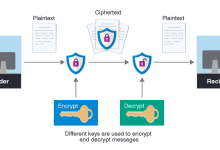
Encryption
What Is Encryption Types of Encryptions Password Encryption (Process) When we talk about passwords, encryption or hashing is critical for security. Here’s the step‑by‑step process: Where Encryption Is Used Benefits
What Is Encryption Types of Encryptions Password Encryption (Process) When we talk about passwords, encryption or hashing is critical for security. Here’s the step‑by‑step process: Where Encryption Is Used Benefits
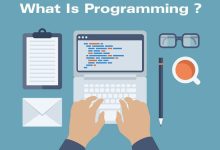
Programming (the activity) Programming is the process of designing instructions for a computer. Those instructions ultimately need to be executed by hardware (CPU, memory, I/O devices). Programmers think in algorithms, but the computer only understands electrical signals and binary (0s and 1s). Language (the tool) Programming languages are the tools that translate human logic into something hardware can execute. High‑level languages (Python, Java, PHP) are abstract and easy for humans. Low‑level languages (Assembly, C) are closer to hardware, giving more control. Compilers and interpreters act as bridges: Interpreter → translates line by line while running. Compiler → translates code into machine instructions before running. Classification Hardware How programs run Popular languages at a glance Programming + Language + Hardware Together Flow:
Mobile App A mobile app (short for mobile application) is a software program designed to run on mobile devices such as smartphones, tablets, and wearables. Key Points Mobile App Development Mobile app development is the process of designing, building, and deploying applications for mobile devices such as smartphones and tablets. These apps can be native (iOS/Android), cross‑platform, hybrid, or progressive web apps (PWAs), depending on the chosen technology stack. Platforms Languages Development Tools

Website Web Application Web Development Web development is the process of building and maintaining websites and web apps. It has two main layers: Front‑End Development (Client Side) Back‑End Development (Server Side) Full‑Stack Development Website vs. Web App “A website is an online collection of pages for presenting information, while a web application is interactive software running in the browser; web development is the structured process of building both, across front‑end and back‑end layers.”
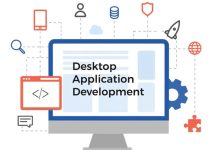
Desktop Application Desktop App Development Approaches Core Components Development Process Tools & Languages
Categories of International Online Services Social & Email E‑commerce Search & Browsers Online Payments Music & Video Gaming Maps & Navigation Lifestyle Services
Open-Source Core with Google Ecosystem Android is a mobile operating system developed by Google and the Open Handset Alliance. It is based on the Linux kernel and designed primarily for smartphones and tablets, but also powers smart TVs, cars, and wearables. Android combines an open-source foundation with optional proprietary services from Google. Historical Background Open-Source Nature Relationship with Google Mobile Services (GMS) Architecture and Features Summary 7.Comparison with Other Mobile OS Feature Android iOS (Apple) HarmonyOS (Huawei) Source Model Open-source (with proprietary parts) Closed-source Hybrid (open + proprietary) Customization Very high (skins, themes, OEM tweaks) Limited (Apple-controlled) Moderate App Store Google Play + third-party stores App Store only AppGallery + APKs Market Share Largest globally Strong in premium markets Regional...
Apple’s Unified Smartphone Experience iPhone is Apple’s flagship smartphone line, first introduced in 2007. It runs exclusively on iOS, Apple’s proprietary mobile operating system. Unlike Android devices, which share a common OS across many manufacturers, the iPhone and iOS are designed together, ensuring tight integration of hardware and software for performance, security, and user experience. Historical Background Architecture and Features iPhone (Hardware) iOS (Software) Types of iPhones Model Description Standard iPhone Mainstream models (e.g., iPhone 15, 16, 17). iPhone Pro Premium models with advanced cameras and displays. iPhone Air (2025) Lightweight model focusing on portability. iPhone SE Budget-friendly model with classic design and modern internals. Real-World Example: iPhone 15 Pro (2023) Comparison with Other Smartphones Feature iPhone + iOS Android...
Microsoft’s Bold but Short-Lived Mobile OS Windows Phone was a proprietary mobile operating system developed by Microsoft, designed to compete with iOS and Android. It introduced a distinctive “Live Tiles” interface, tight integration with Office and Xbox services, and aimed to unify the mobile experience with the broader Windows ecosystem. Historical Background Architecture and Features Comparison with Other Mobile OS Feature Windows Phone iOS (Apple) Android (Google) Source Model Closed-source Closed-source Open-source (AOSP) Interface Live Tiles, Metro UI App grid, minimalist Highly customizable App Ecosystem Limited, fewer apps Large, curated App Store Largest, diverse Play Store Market Share Peaked ~3–4% globally ~20% globally ~70% globally Status Discontinued (2020) Active Active
The Mobile Giant of the 2000s Symbian OS was a proprietary mobile operating system originally derived from Psion’s EPOC32 in the late 1990s. It became the dominant smartphone platform of the 2000s, powering millions of devices across multiple brands, most notably Nokia. Symbian was known for its multitasking, adaptability, and early support for mobile internet and apps. Historical Background Architecture and Features Brands That Used Symbian Representative Models Comparison with Other Mobile OS Feature Symbian OS iOS (Apple) Android (Google) Source Model Proprietary (briefly open-source) Closed-source Open-source (AOSP) Interface S60, UIQ, MOAP variants App grid, minimalist Highly customizable App Ecosystem Fragmented, limited Curated App Store Largest, diverse Play Store Market Share Dominant in 2000s, declined after 2010 Growing since 2007...
Secure Communication for the Enterprise Era BlackBerry OS was a mobile operating system designed exclusively for BlackBerry smartphones. It emphasized secure communication, multitasking, and productivity, making it the preferred choice for businesses and governments in the 2000s. Historical Background Architecture and Features Representative Devices Comparison with Other Mobile OS Feature BlackBerry OS iOS (Apple) Android (Google) Source Model Closed-source Closed-source Open-source (AOSP) Strength Secure email, enterprise integration User-friendly, app-rich ecosystem Customizable, largest app library App Ecosystem Limited, enterprise-focused Large, curated App Store Largest, diverse Play Store Market Share Dominant in 2000s enterprise market Strong in consumer market Largest globally Status Discontinued (2013) Active Active
Huawei’s Distributed Operating System HarmonyOS is a multi-platform operating system developed by Huawei. Unlike traditional mobile OS platforms, HarmonyOS is built as a distributed OS, meaning it can seamlessly run across different device types — from phones and tablets to smart TVs, wearables, and IoT devices. It integrates tightly with Huawei Mobile Services (HMS) and AppGallery, Huawei’s alternative to Google’s ecosystem. Historical Background Architecture and Features Representative Devices Comparison with Other Mobile OS Feature HarmonyOS Android (Google) iOS (Apple) Source Model Hybrid (open + proprietary) Open-source (AOSP + proprietary GMS) Closed-source Design Distributed, cross-device Mobile-focused, customizable Mobile-focused, tightly controlled App Ecosystem Huawei AppGallery, Quick Apps Google Play Store Apple App Store Market Share Strong in China, growing globally Largest worldwide...
Moore Threads announced that it will host the first MUSA Developer Conference (MDC 2025) on December 19–20 at the Zhongguancun International Innovation Center in Beijing. With the theme “Create, Connect, Converge”, the event will showcase full-stack capabilities of the MUSA unified system architecture, spanning hardware, software, technology, and application scenarios.
Founder and CEO Zhang Jianzhong will deliver a keynote at the main forum, outlining the MUSA full-stack strategy and unveiling a new-generation GPU architecture along with a complete portfolio of products, technologies, and industry solutions. The conference will also feature more than 20 technical sub-forums covering AI computing, graphics rendering, and scientific computing.
In addition, Moore Threads will launch the “Moore Academy” and present a 1,000+ square meter “MUSA Carnival” exhibition area, highlighting AI large models, embodied intelligence, digital twins, and other cutting-edge applications.
Four senior executives directly reporting to CEO Tim Cook — AI chief John Giannandrea, interface design head Alan Dye, general counsel Kate Adams, and government affairs head Jackson — resigned within the past week.
Insider Mark Gurman notes Apple’s leadership has been unusually stable for over a decade, but many veterans are now nearing 60. Hardware SVP Johny Srouji, who leads Apple’s chip development, has also told Cook he is seriously considering leaving for another company.

 seseltan


Latest Comments
666