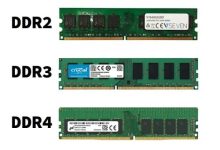
RAM
Definition & Role Random Access Memory (RAM) is a volatile memory that temporarily stores data and instructions while a computer is running. It acts as the CPU’s workspace, enabling fast access to information needed for active processes. Unlike permanent storage such as hard drives or SSDs, RAM loses its content when power is turned off. Its size and speed directly affect system performance and multitasking capability. Types & Caching Tiers Memory Type Volatility Typical Use Case Characteristics DRAM (Dynamic RAM) Volatile Main system memory High density, low cost, requires refresh cycles SRAM (Static RAM) Volatile CPU caches (L1/L2/L3) Very fast, no refresh needed, low density, expensive eDRAM (Embedded DRAM) Volatile On-die cache, specialized processors Faster than external DRAM, integrated into...
 seseltan