
ISP
What Is a Service Provider? Internet Service Provider (ISP) Telecom Service Provider ⚙️ How They Work
What Is a Service Provider? Internet Service Provider (ISP) Telecom Service Provider ⚙️ How They Work
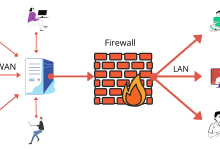
What Is a Firewall? Types of Firewalls How Firewalls Work

A VPN (Virtual Private Network) encrypts all your internet traffic and routes it through a secure server, while a Proxy simply acts as an intermediary server that hides your IP address but does not encrypt your data. VPNs provide stronger privacy and security, whereas proxies are lighter and mainly used for location spoofing or bypassing restrictions. Proxy Server VPN vs Proxy Comparison Feature VPN Proxy Encryption Yes, full traffic encrypted No encryption IP Masking Yes Yes Scope Entire device traffic Specific apps/websites only Security High (protects against hackers/ISP) Low (traffic visible to ISP/hackers) Speed Slightly slower (due to encryption) Faster, but less secure Cost Usually paid Often free or cheaper

What Is a Computer Virus? Malware Common Types of Malwares Virus Common Types of Viruses What Is Antivirus? Types of Threats Antivirus Protects Against How Antivirus Works Relationship Between Virus and Antivirus
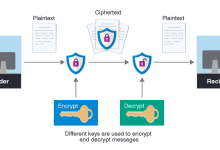
What Is Encryption Types of Encryptions Password Encryption (Process) When we talk about passwords, encryption or hashing is critical for security. Here’s the step‑by‑step process: Where Encryption Is Used Benefits
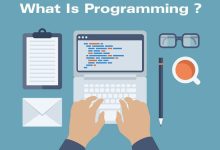
Programming (the activity) Programming is the process of designing instructions for a computer. Those instructions ultimately need to be executed by hardware (CPU, memory, I/O devices). Programmers think in algorithms, but the computer only understands electrical signals and binary (0s and 1s). Language (the tool) Programming languages are the tools that translate human logic into something hardware can execute. High‑level languages (Python, Java, PHP) are abstract and easy for humans. Low‑level languages (Assembly, C) are closer to hardware, giving more control. Compilers and interpreters act as bridges: Interpreter → translates line by line while running. Compiler → translates code into machine instructions before running. Classification Hardware How programs run Popular languages at a glance Programming + Language + Hardware Together Flow:
Mobile App A mobile app (short for mobile application) is a software program designed to run on mobile devices such as smartphones, tablets, and wearables. Key Points Mobile App Development Mobile app development is the process of designing, building, and deploying applications for mobile devices such as smartphones and tablets. These apps can be native (iOS/Android), cross‑platform, hybrid, or progressive web apps (PWAs), depending on the chosen technology stack. Platforms Languages Development Tools
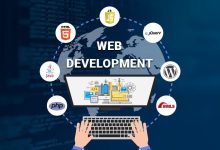
Website Web Application Web Development Web development is the process of building and maintaining websites and web apps. It has two main layers: Front‑End Development (Client Side) Back‑End Development (Server Side) Full‑Stack Development Website vs. Web App “A website is an online collection of pages for presenting information, while a web application is interactive software running in the browser; web development is the structured process of building both, across front‑end and back‑end layers.”
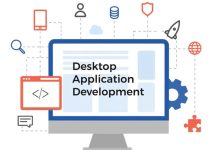
Desktop Application Desktop App Development Approaches Core Components Development Process Tools & Languages
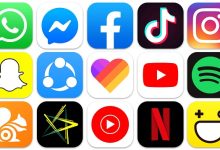
Categories of International Online Services Social & Email E‑commerce Search & Browsers Online Payments Music & Video Gaming Maps & Navigation Lifestyle Services
Open-Source Core with Google Ecosystem Android is a mobile operating system developed by Google and the Open Handset Alliance. It is based on the Linux kernel and designed primarily for smartphones and tablets, but also powers smart TVs, cars, and wearables. Android combines an open-source foundation with optional proprietary services from Google. Historical Background Open-Source Nature Relationship with Google Mobile Services (GMS) Architecture and Features Summary 7.Comparison with Other Mobile OS Feature Android iOS (Apple) HarmonyOS (Huawei) Source Model Open-source (with proprietary parts) Closed-source Hybrid (open + proprietary) Customization Very high (skins, themes, OEM tweaks) Limited (Apple-controlled) Moderate App Store Google Play + third-party stores App Store only AppGallery + APKs Market Share Largest globally Strong in premium markets Regional...
Apple’s Unified Smartphone Experience iPhone is Apple’s flagship smartphone line, first introduced in 2007. It runs exclusively on iOS, Apple’s proprietary mobile operating system. Unlike Android devices, which share a common OS across many manufacturers, the iPhone and iOS are designed together, ensuring tight integration of hardware and software for performance, security, and user experience. Historical Background Architecture and Features iPhone (Hardware) iOS (Software) Types of iPhones Model Description Standard iPhone Mainstream models (e.g., iPhone 15, 16, 17). iPhone Pro Premium models with advanced cameras and displays. iPhone Air (2025) Lightweight model focusing on portability. iPhone SE Budget-friendly model with classic design and modern internals. Real-World Example: iPhone 15 Pro (2023) Comparison with Other Smartphones Feature iPhone + iOS Android...
In recent years, the focus of AI has shifted from training to inference, and NVIDIA is aiming to reshape this space with its newly announced LPU (Language Processing Unit) chips at last week’s GTC conference.
During the event, NVIDIA’s Chief Scientist Bill Dally sat down with Google’s Chief Scientist Jeff Dean for a deep technical discussion. Dally highlighted that the real bottleneck in AI inference today isn’t raw compute power—it’s communication overhead.
This leap would represent a massive acceleration in AI responsiveness, making real-time, high-throughput inference practical for everyday use.
Huawei has officially scheduled the release of the Enjoy 90 series for March 23, featuring two core models: Enjoy 90 Plus and Enjoy 90 Pro Max.
The Enjoy 90 Pro Max continues Huawei’s signature Star Ring symmetrical aesthetic, closely resembling the flagship Mate 80 series. It will be available in several refined colors: Feitian Green, Dawn Gold, Snow White, and Obsidian Black.
A major highlight is the inclusion of Kirin 8-series chips, previously reserved for higher-end nova models. This marks a significant leap in performance for the Enjoy lineup. Combined with the latest HarmonyOS 6, the series promises smoother and more stable system interactions compared to competitors in the same segment.
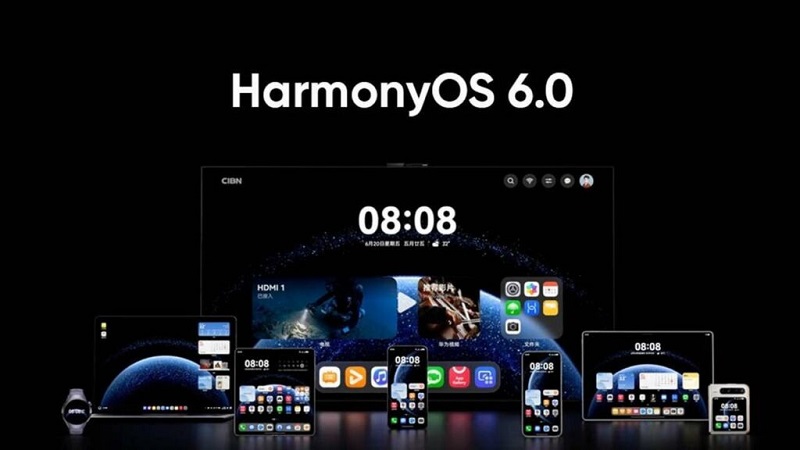
Huawei emphasizes exceptional battery life as a key selling point. Executive Richard Yu praised the series during a livestream, stating its endurance is so strong that users may no longer need to carry a power bank.
The Enjoy 90 series also inherits Huawei’s renowned signal performance, ensuring stable connectivity even in complex indoor environments or areas with weak coverage.
This combination of flagship-inspired design, upgraded performance, long-lasting battery, and reliable connectivity positions the Enjoy 90 series as a major upgrade in Huawei’s mid-range portfolio.
On March 20, Apple announced an additional donation to the China Development Research Foundation, officially launching a new program focused on youth employment and skills development in underdeveloped regions.
Apple and the foundation have already worked together for nearly a decade in areas such as rural teacher training, early childhood education, and integrating new technologies into classrooms. This latest effort underscores Apple’s long-term commitment to education and workforce development in China.
On the evening of March 19, following the launch of the new-generation SU7 and other spring products, Xiaomi held a media briefing. Addressing the booming robotics industry, CEO Lei Jun revealed that Xiaomi had already entered the robotics field six years ago and is now positioned among the industry leaders.
Lei Jun explained that when Xiaomi established its manufacturing operations in Beijing in 2017, the core objective was intelligent manufacturing and advanced equipment, rather than traditional production models.
During the session, Lei Jun praised Unitree Robotics and its chairman Wang Xingxing for their achievements in mechanical engineering, calling the company an industry benchmark. He further disclosed that Xiaomi’s investment arm, Shunwei Capital, invested in Unitree five years ago, aiming to foster collective growth across the robotics sector.
This discussion highlighted Xiaomi’s long-term R&D background and strategic intent in robotics and high-end equipment, underscoring its ambition to remain at the forefront of intelligent manufacturing.
Moore Threads announced that it will host the first MUSA Developer Conference (MDC 2025) on December 19–20 at the Zhongguancun International Innovation Center in Beijing. With the theme “Create, Connect, Converge”, the event will showcase full-stack capabilities of the MUSA unified system architecture, spanning hardware, software, technology, and application scenarios.
Founder and CEO Zhang Jianzhong will deliver a keynote at the main forum, outlining the MUSA full-stack strategy and unveiling a new-generation GPU architecture along with a complete portfolio of products, technologies, and industry solutions. The conference will also feature more than 20 technical sub-forums covering AI computing, graphics rendering, and scientific computing.
In addition, Moore Threads will launch the “Moore Academy” and present a 1,000+ square meter “MUSA Carnival” exhibition area, highlighting AI large models, embodied intelligence, digital twins, and other cutting-edge applications.

 seseltan

Latest Comments
666