What Is a Computer Virus?
- Definition: A computer virus is a type of malicious software (malware) that attaches itself to files or programs and spreads when those files are executed.
- Characteristics:
- Needs a host file or program to run.
- Can replicate and spread to other files or systems.
- Often causes damage: corrupting files, stealing data, slowing down systems.
- Examples of virus behavior:
- Displaying unwanted messages.
- Deleting or altering files.
- Consuming system resources.
- Opening backdoors for hackers.
Malware
- Definition: Malware is the broad term for all types of malicious software designed to harm, exploit, or steal data from computers and networks.
- Classification principle: Malware is categorized by function or behavior.
Common Types of Malwares
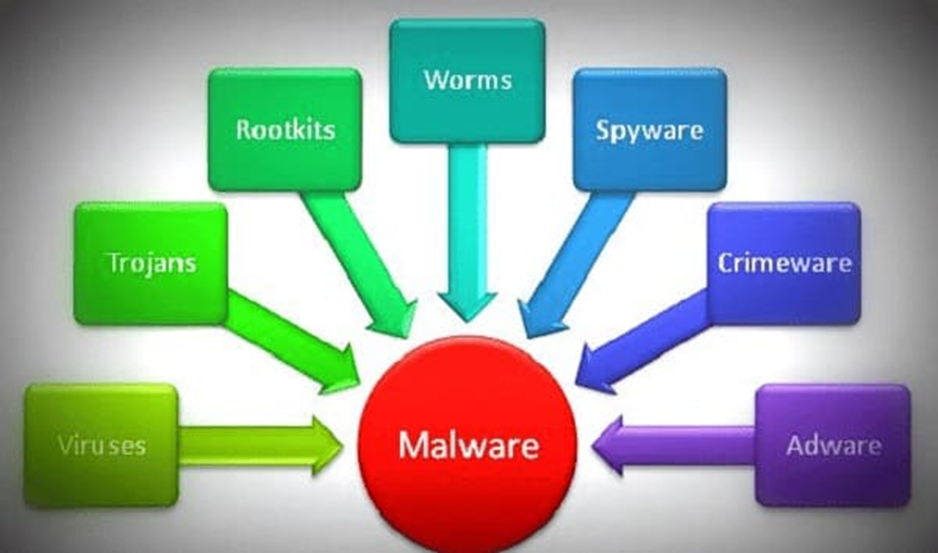
- Viruses → attach to files/programs, spread when executed.
- Worms → self‑replicating, spread across networks without a host file.
- Trojan Horses → disguised as legitimate software, trick users into installing.
- Spyware → secretly collects user information (keystrokes, browsing habits).
- Adware → forces unwanted ads, often tracks user behavior.
- Rootkits / Toolkits → hide malware presence, allow remote control with high privileges.
- Ransomware → encrypts files, demands payment for decryption.
- Keyloggers → record keyboard input to steal credentials.
Virus
- Definition: A virus is a specific type of malware that requires a host file or program to spread.
- Classification principle: Viruses are categorized by infection method or technical characteristics.
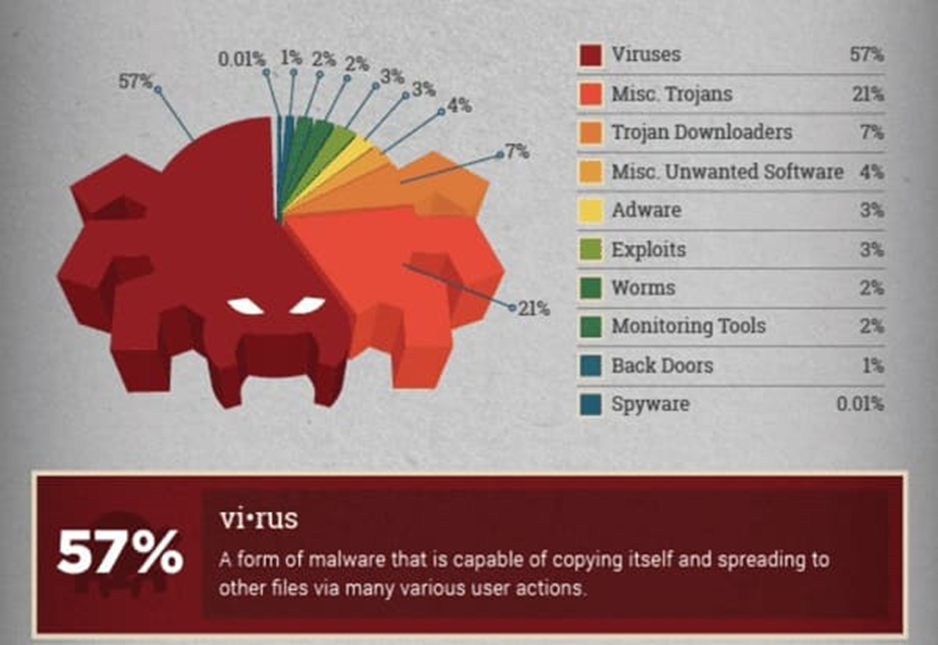
Common Types of Viruses
- File Infector Virus → attaches to executable files.
- Macro Virus → spreads via document macros (Word, Excel).
- Boot Sector Virus → infects disk boot sectors.
- Resident Virus → hides in memory, infects files during execution.
- Multipartite Virus → spreads through multiple channels (files + boot sector).
- Polymorphic Virus → changes its code each time it replicates.
- Metamorphic Virus → rewrites its own code completely.
- Web Scripting Virus → exploits browser or website script vulnerabilities.
What Is Antivirus?
- Definition: Antivirus software is designed to detect, prevent, and remove viruses and other malware.
- Functions:
- Detection: Scans files/programs for virus signatures or suspicious behavior.
- Prevention: Blocks execution of malicious code.
- Removal: Quarantines or deletes infected files.
- Real‑time protection: Monitors system activity continuously.
Types of Threats Antivirus Protects Against
- Viruses: Malicious code that attaches to files and spreads.
- Worms: Self‑replicating programs that spread across networks.
- Trojan horses: Malware disguised as legitimate software.
- Spyware: Secretly collects user data.
- Adware: Displays unwanted ads.
- Ransomware: Encrypts files and demands payment for decryption.
How Antivirus Works
- Signature‑based detection: Compares files against a database of known malware.
- Heuristic analysis: Identifies suspicious behavior or code patterns.
- Sandboxing: Runs programs in a safe environment to observe behavior.
- Machine learning/AI: Modern antivirus uses AI to detect new, unknown threats.
Relationship Between Virus and Antivirus
- Virus: The threat — malicious code that spreads and harms systems.
- Antivirus: The defense — software that identifies and neutralizes those threats.
- Analogy:
- Virus = disease.
- Antivirus = medicine + immune system.
-=||=-FavoriteLike (0)



Must log in before commenting!
Sign In Sign Up