What Is Domain Registration?
- Domain registration is the process of acquiring a domain name (e.g.,
sslgadgets.com). - A domain name is the human‑friendly address that points to your website’s server.
- Domain Makes websites and services easier to access without needing to remember numeric IP addresses.
- Registration ensures that no one else can use the same name during your ownership period.
- It is a part of the internet naming system, alongside IP allocation.
Governance & Hierarchy

- ICANN (Internet Corporation for Assigned Names and Numbers)
- Oversees the global DNS root.
- Coordinates domain name policies.
- Registries
- Manage specific top‑level domains (TLDs).
- Examples:
- Verisign → .com, .net
- Public Interest Registry → .org
- Country code registries → .ph (Philippines), .uk (United Kingdom).
- Registrars
- Companies accredited by ICANN to sell domain names to the public.
- Examples: GoDaddy, Namecheap, Google Domains.
- End Users / Organizations
- Register domains via registrars.
- Domains must be renewed periodically (usually yearly).
Domain Name Space
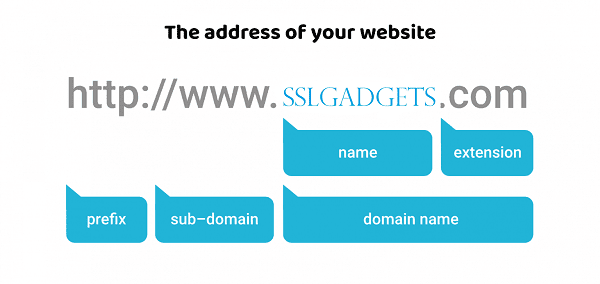
- Structure:
- Root (.) → Top‑Level Domains (TLDs) → Second‑Level Domains → Subdomains.
- Example: www.example.com
- Root: .
- TLD: .com
- Second‑Level: example
- Subdomain: www
- Types of TLDs:
- gTLDs (Generic): .com, .org, .net, .info
- ccTLDs (Country Code): .ph, .uk, .jp
- New gTLDs: .app, .shop, .xyz
Reserved Domains
Certain domains are reserved and cannot be registered:
- Example domains: example.com, example.net, example.org (used for documentation).
- Test domains: test, invalid.
- Infrastructure domains: .arpa (used for technical purposes like reverse DNS).
-=||=-FavoriteLike (0)


Must log in before commenting!
Sign In Sign Up