Basic Definition
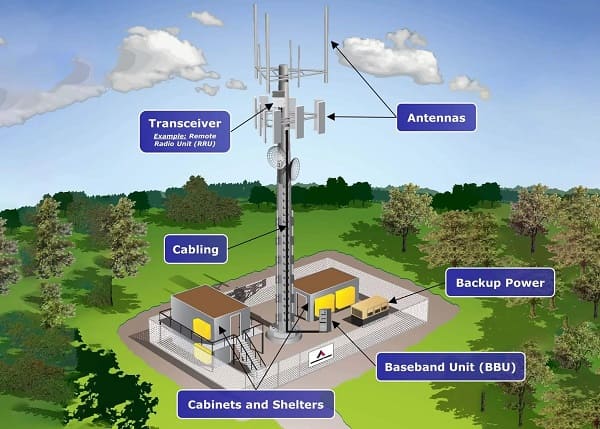
- A Cell Tower is a tall physical structure equipped with antennas and radio equipment.
- It connects mobile phones to the cellular network by transmitting and receiving radio signals.
- It is the visible part of the mobile network infrastructure.
Technology
- Uses radio frequency (RF) signals to communicate with mobile devices.
- Each tower covers a geographic area called a cell.
- Towers are linked to the operator’s core network, routing calls and data.
Coverage & Capacity
- Coverage: One tower typically covers a radius of several hundred meters to several kilometers, depending on power and environment.
- Capacity: Each tower can handle a limited number of simultaneous connections; more towers = more capacity.
Pros & Cons
- Pros:
- Provides wide-area coverage.
- Essential for mobile communication (voice, SMS, data).
- Cons:
- Expensive to build and maintain.
- Requires zoning approval and can face public opposition.
Types
- Urban areas: Towers are closer together for high capacity.
- Rural areas: Fewer towers, each covering larger distances.
- 5G networks: Require denser tower placement or small cells for ultra-fast speeds.
-=||=-FavoriteLike (1)





666