On December 4, 2025, the 2025 Digital Technology Ecosystem Conference opened at the China Import and Export Fair Complex in Pazhou, Guangzhou, under the theme “Smart Navigation, Shared Intelligence.”
This four‑day industry event not only showcased China Telecom’s benchmark achievements in self‑developed technologies, platform construction, data services, and AI ecosystems, but also gathered the innovative strength of core partners across the industry chain.
As a key strategic partner of China Telecom, Huawei unveiled a major exhibition area of 468㎡ at Booth C01 in Zone B. Centered on its “1+8+N” all‑scenario product matrix and HarmonyOS ecosystem solutions, Huawei presented coordinated achievements in smart devices, smart cars, and smart homes—demonstrating its technological innovation capabilities and image as an industry leader.
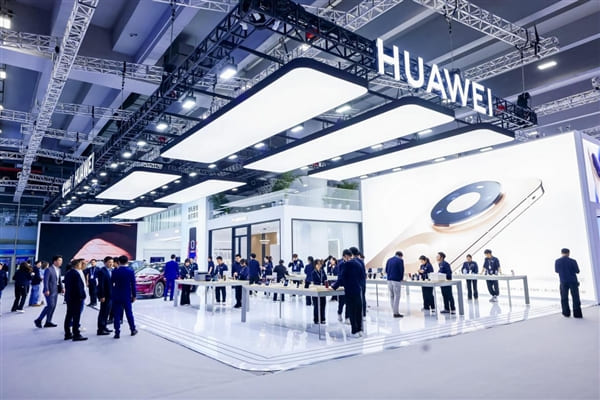
Thoughtful Booth Layout: 1+8 Products Showcasing Core Strength
Entering Huawei’s booth, the scientific layout design made the logic of the all‑scenario ecosystem clear. The booth adopted a “core products + scenario experience” dual‑track presentation model, with six functional zones: 1+8 product display tables, HarmonyOS Smart Mobility zone, HarmonyOS Smart Home zone, MateTv zone, Huawei Qingyun zone, and LED video zone. The 1+8 product display tables were further divided into themed sections for wearables, smart office, nova + audio, etc., allowing visitors to experience different product categories according to scenario needs. This layout reflected Huawei’s “consumer‑centric” philosophy and vividly demonstrated the systematic and complete nature of its all‑scenario ecosystem—seamlessly connecting personal devices, home smart spaces, and smart mobility terminals into an organic whole.
The 1+8 product display area was undoubtedly the focal point for tech enthusiasts. Multiple flagship and representative products were showcased, highlighting Huawei’s deep expertise in consumer technology. On the flagship and foldable tables, the HUAWEI Mate80 series and Mate XTs Extraordinary Master formed a “dual‑flagship” matrix. The Mate80 series debuted with the Kirin 9030/9030 Pro flagship chips, deeply integrated with HarmonyOS 6.0, delivering comprehensive upgrades in imaging, multitasking, and battery life. It also introduced the innovative “Smart Grip” feature, intelligently adjusting call banners to match hand positions, solving the hassle of single‑handed call answering. Its AI photography impressed audiences with noise control and dynamic range in night shots. The Mate XTs Extraordinary Master broke physical limits with ultra‑thin folding design and enhanced durability, offering smooth “fold‑to‑split screen, unfold‑to‑merge” experiences.
On the PC/tablet and wearable tables, the HUAWEI MateBook Fold Extraordinary Master, WATCH Ultimate 2, and FreeClip 2 formed the core of smart office and health management. The MateBook Fold set a benchmark for foldable laptops, featuring a dual‑layer OLED flexible display: unfolded as an 18‑inch 4:3 screen (3296×2472 resolution), folded into two independent 13‑inch 3:2 screens. With multi‑screen collaboration, it enabled seamless file drag‑and‑drop and cross‑device editing with the Mate80 series. The WATCH Ultimate 2 stood out with professional health monitoring and ultra‑long battery life, adding deep‑sea diving mode and cardiovascular health assessment. The FreeClip 2 semi‑open earphones, with innovative clip‑on design, balanced high‑quality sound and noise reduction, fitting office and commuting scenarios.
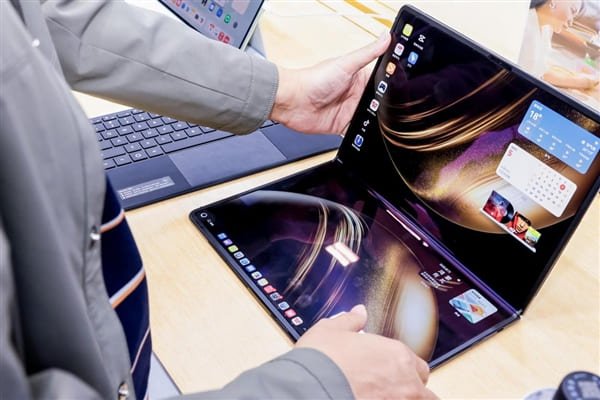
Scenario Synergy: Smart Mobility and Smart Home Highlight Ecosystem Strength
The HarmonyOS Smart Mobility zone featured three major models—AITO M9, Luxeed S9, and Stelato R7—forming the most impactful display unit and marking the deep implementation of Huawei’s “people‑car‑home” all‑scenario strategy.
- Luxeed S9 positioned as “new luxury,” offered dual‑motor AWD and rear‑drive options, equipped with Huawei’s Car Voice system and ADS driver assistance, combining natural voice interaction with intelligent driving. Paired with NAPPA leather seats and Huawei’s premium audio, it fused luxury with smart tech.
- AITO M9 focused on family travel, with spacious design, zero‑gravity rear seats, and intelligent child safety monitoring, embodying the concept of a “mobile smart home.”
- Stelato R7, a sporty coupe, balanced driving performance and smart experience through optimized HarmonyOS cockpit and driving systems.
All three models featured HarmonyOS smart cockpits, enabling seamless interconnection with phones, watches, and personal devices. Navigation routes, music, and other information flowed naturally across devices, realizing true “people‑car‑home” integration.
The HarmonyOS Smart Home zone and MateTv zone built a complete smart home ecosystem. From smart locks and lights to full‑house security, devices interconnected via HarmonyOS. Users could control the entire home with one command from a Mate80 phone or smart speaker—for example, saying “Home Mode” triggered lights, curtains, and air conditioning adjustments. MateTv served as both entertainment hub and smart home control center, displaying device status in real time. This scenario‑based demonstration showed Huawei’s smart home as “active intelligence,” with devices automatically adjusting to user habits, eliminating the need for deliberate operation.
HarmonyOS as the Core: Strategic Strength Leading the Industry
HarmonyOS was the backbone of Huawei’s all‑scenario ecosystem. Unlike traditional operating systems with fragmented devices, HarmonyOS (most showcased products ran HarmonyOS 6.0, such as the Mate80 series) leveraged distributed technology to achieve “develop once, deploy across devices” and “hardware collaboration, resource sharing.”
In Huawei’s interactive experience zone, visitors could feel this ecosystem synergy firsthand: videos shot on a Mate80 phone seamlessly continued on MateTv; documents half‑edited on the phone could be resumed on the MateBook Fold with full synchronization; calls received on WATCH Ultimate 2 while driving automatically transferred to the car system without manual operation. This cross‑device seamless collaboration broke down “information silos” and built a user‑centered all‑scenario experience loop.
Conclusion: All‑Scenario Layout Builds Barriers, Innovation Drives the Smart Future
The deep all‑scenario showcase at this Digital Technology Ecosystem Conference reflected Huawei’s clear and firm ecosystem strategy. The 468㎡ exhibition area was not just a product display, but a vivid interpretation of Huawei’s mission: “Bring the digital world to every person, home, and organization, and build a fully connected intelligent world.”
In today’s era of rapid smart technology iteration, Huawei, with continuous innovation as its foundation and HarmonyOS as its link, is driving transformative experiences through all‑scenario layouts spanning personal devices, smart cars, and smart homes. This not only delivers revolutionary experiences to users but also sets a benchmark for ecosystem collaboration in the industry.
As the 2025 Digital Technology Ecosystem Conference continues, Huawei’s demonstrated all‑scenario strength will inject greater momentum into the development of the smart industry, leading the sector toward a new future of “Smart Navigation, Shared Intelligence.”




Must log in before commenting!
Sign In Sign Up