Categories of Storage
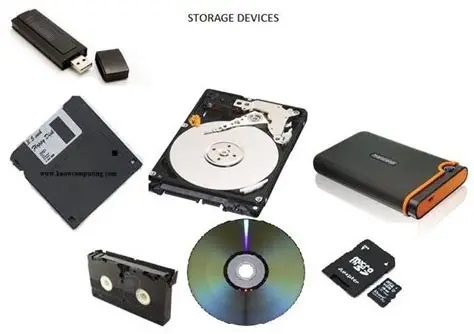
Primary Storage (Volatile)
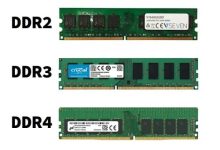
- RAM (Random Access Memory): Fast, temporary memory used by the CPU for active tasks.
- Cache Memory: Extremely fast memory closer to the CPU (L1, L2, L3).
- Registers: Smallest and fastest memory inside the CPU.
Secondary Storage (Non-Volatile)
- HDD (Hard Disk Drive): Magnetic storage, high capacity, slower, cost-effective.
- SSD (Solid State Drive): Flash-based, faster than HDD, no moving parts, more expensive per GB.
- SSHD (Hybrid Drive): Combines SSD speed with HDD capacity.
Tertiary & Offline Storage
- Optical Drives: CD/DVD/Blu-ray — used for media and backups.
- Tape Drives: Used in enterprise backup and archival systems.
- External Drives: USB flash drives, external HDDs/SSDs.
Cloud Storage
- Data stored on remote servers accessed via the internet.
- Examples: Google Drive, Dropbox, OneDrive, AWS S3.
Key Characteristics
| Feature | HDD | SSD | RAM | Cloud |
| Volatility | Non-volatile | Non-volatile | Volatile | Non-volatile |
| Speed | Slow (100 MB/s) | Fast (500 MB/s–7 GB/s) | Very fast (10–100 GB/s) | Depends on internet |
| Cost per GB | Low | Medium–High | High | Subscription-based |
| Durability | Mechanical wear | No moving parts | Not for storage | Depends on provider |
| Use Case | Mass storage | OS, apps, games | Active processing | Backup, sync, access anywhere |
Storage Hierarchy (Fastest to Slowest)
- CPU Registers
- CPU Cache (L1/L2/L3)
- RAM
- SSD (NVMe > SATA)
- HDD
- Optical/Tape
- Cloud (network-dependent)
Storage Capacity Units
- 1 KB = 1,024 bytes
- 1 MB = 1,024 KB
- 1 GB = 1,024 MB
- 1 TB = 1,024 GB
- 1 PB = 1,024 TB
-=||=-FavoriteLike (0)



Must log in before commenting!
Sign In Sign Up